
Product line
Bulk Peanut Oil — Refined Groundnut Oil Supplier
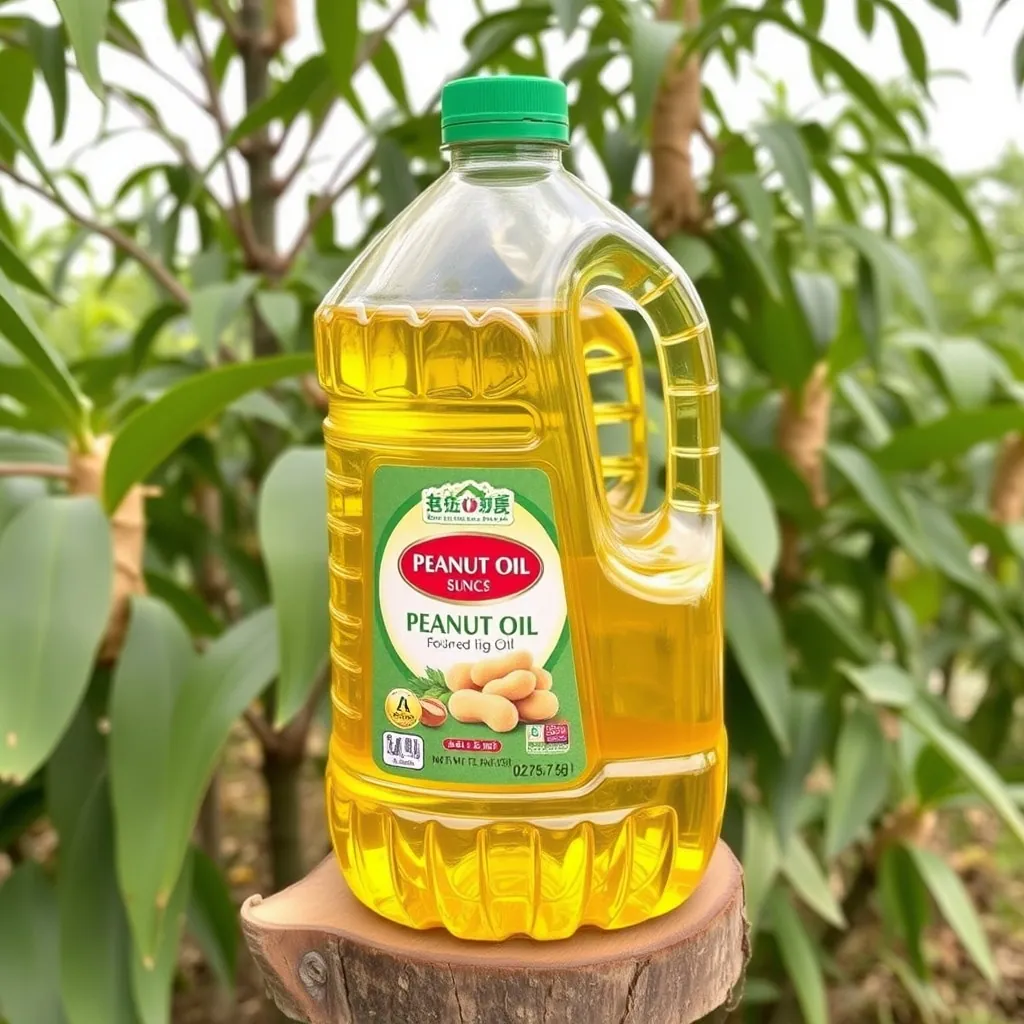
Refined peanut oil — groundnut oil through most of the trade — is the pale, neutral, heat-stable grade that frying operations, snack plants and bottlers buy by the drum or by the container. We refine it in Ukraine from imported crude groundnut oil and export it against your specification, with the parameters you set confirmed on the certificate of analysis for the consignment. Peanut is a declarable allergen and the labelling rules differ sharply between markets, so that question is answered on this page too.
Peanut oil, groundnut oil and arachis oil are one product
The three names describe the same oil, and which one you meet depends on where you are buying. The Codex Alimentarius standard for named vegetable oils (CODEX STAN 210-1999) files it as arachis oil, with peanut oil and groundnut oil given as alternative names, and defines it as the oil derived from groundnuts, the seeds of Arachis hypogaea L.
In practice North American buyers say peanut oil; India, much of Africa, the United Kingdom and most commodity documentation say groundnut oil; arachis oil appears in standards and laboratory reports. A quotation for any of the three is a quotation for the same thing, but because the words do not travel equally well, write the grade and the botanical name into the contract.
Refined, highly refined and unrefined: what the words do
Refined peanut oil has been through neutralising, bleaching and deodorising, which strips the roasted-nut aroma and the colour and leaves a pale, near-neutral, heat-stable oil. Unrefined, cold pressed or expelled peanut oil keeps that aroma and is a different product with a different use.
Because the refining is ours, how far it is taken is a contract decision rather than something fixed before we saw the oil. The phrase highly refined is not decoration either, it is a term with legal weight in the United States: the Senate report accompanying the Food Allergen Labeling and Consumer Protection Act of 2004 glossed highly refined oils as meaning refined, bleached and deodorised oils. If your enquiry or your artwork turns on that distinction, state which of the two you are buying, because they are not the same purchase.
Allergen labelling differs by market, and that changes what you can sell
Peanut is a declarable allergen, and the rule in one market is not the rule in another. Under United States law, the Food Allergen Labeling and Consumer Protection Act excludes highly refined oil derived from one of the major allergen foods, and ingredients derived from such an oil, from the statutory definition of a major food allergen. Under European Union law, Regulation (EU) No 1169/2011 lists peanuts and products thereof in its Annex II of declarable allergens and grants no refining exemption for peanut oil, even though it does grant one for fully refined soybean oil and fat. The same oil therefore carries a different declaration obligation on either side of the Atlantic.
That is a description of two regimes as they are written. It is not advice on your product, and it is not a statement that any consignment is suitable for a person with a peanut allergy. Confirm the allergen handling, declaration and labelling rules that apply where you sell, and what your customer's own allergen policy demands, before you commit to a pack or to artwork.
We claim no allergen-specific certification, segregation regime or testing protocol, and we will not certify one — refining the oil ourselves does not change that and does not entitle us to. What we will do is name the grade you have bought on the contract and report the parameters you have specified on the certificate of analysis for the consignment.
Where the oil comes from, and who buys it
We refine this oil ourselves; we do not grow or crush groundnuts. Peanut is not a Ukrainian crop, so the crude arrives from producing origins and the refining — neutralising, bleaching and deodorising — happens at our own plant in Ukraine before the oil is packed and exported. Both halves of that matter, because they answer different questions: where the crop came from, and who controlled the process that made the grade you are buying.
The practical consequence is that the refining parameters are set in our own process rather than inherited, and the certificate of analysis reports a lot we have processed rather than one we have resold.
- Commercial frying operations and restaurant groups, where peanut oil is traditional for deep frying.
- Snack and prepared-food manufacturers frying several product types on one line.
- Manufacturers of Chinese, South and South East Asian and West African product ranges.
- Bottlers and repackers filling retail and catering packs, often under their own label.
- Importers and distributors supplying catering and speciality retail in their own territory.
The two reasons buyers give for choosing it over a cheaper seed oil are heat behaviour and the flavour neutrality of the refined grade, which lets one fryer run several products without passing taste between them.
Heat performance, without a number attached
Refining raises the temperature at which an oil begins to smoke, because the free fatty acids and the fine particulate that lower it are what refining removes. That is why a refined grade rather than an unrefined one goes into a commercial fryer.
We will not publish a smoke point figure for this oil as though it were our specification. Published values differ between sources, and they describe fresh oil: the figure falls as free fatty acid builds in a working fryer, so fryer life depends on filtration, turnover and temperature control in your kitchen rather than on a number in a datasheet. The chart linked below sets published figures for the common cooking oils side by side.
Codex reference parameters for arachis (groundnut) oil
The ranges below belong to the Codex Alimentarius standard for named vegetable oils (CODEX STAN 210-1999), the internationally accepted reference for this oil. They describe the standard, not a consignment: the certificate of analysis issued with your shipment is what governs, and your own specification may be tighter.
- Relative density (20°C/water at 20°C): 0.912 – 0.920
- Refractive index (ND 40°C): 1.460 – 1.465
- Saponification value: 187 – 196 mg KOH/g oil
- Iodine value: 86 – 107
- Unsaponifiable matter: not more than 10 g/kg
- Arachidic and higher fatty acid content: should not exceed 48 g/kg
- Acid value, refined oils: not more than 0.6 mg KOH/g
- Peroxide value, refined oils: up to 10 milliequivalents of active oxygen per kg
We publish no house figures for free fatty acid, peroxide value, moisture, colour or any other parameter. You state the limits your specification and your regulator require; those limits go into the contract; the certificate of analysis for the consignment reports what was loaded against them. Independent inspection at loading by SGS, Intertek, Bureau Veritas or another surveyor you appoint can be arranged at your cost.
Aflatoxin and contaminant limits are set by your market
Groundnuts are a crop where mycotoxin control matters, and the limits that apply to oil, where they apply at all, differ between regimes. State the limit and the test method yours imposes, and whether you require testing before shipment, and that becomes a contract term reported on the certificate of analysis.
An unqualified aflatoxin-free claim describes nothing testable. What exists is a result for a lot, measured by a named method, against a limit someone has written down. The same applies to pesticide residues, heavy metals and any other contaminant your market controls: name it, with a figure, and it can be confirmed.
Packing, trade terms and documentation
We load flexitank for a full container moving as one bulk lot, ISO tank where the receiver has dedicated edible oil tankage, 190 kg drums and IBCs where there is no bulk discharge at destination, and PET bottles where you are buying finished retail or catering packs rather than bulk oil. For packed goods, tell us the pack size and the carton and pallet configuration you need.
We quote FOB or CIF to a named port under Incoterms 2020. Payment is by bank transfer (T/T) in EUR or USD, and lead time is typically 7 to 14 days from order confirmation. A certificate of analysis and a certificate of origin ship with every consignment, alongside the commercial invoice, packing list and bill of lading. Our food safety systems are certified to HACCP and ISO 22000; those are the certifications we hold.
What to include in your enquiry
- Grade: refined peanut or groundnut oil, and whether the highly refined distinction matters for your labelling.
- Quality limits: acid value or free fatty acid, peroxide value, moisture, insoluble impurities and colour, each with a maximum.
- Contaminant limits your market imposes, including aflatoxin, with the test method named.
- The allergen declaration your destination market requires on the pack.
- Volume per shipment, and whether this is one consignment or a running contract.
- Packing format, with pack size and pallet configuration for packed goods.
- Destination port and trade term, FOB or CIF, plus any inspection you want appointed at loading.
Enquiries and quotation requests are handled by email, at export@refinesunfloweroil.com, or through the contact form. Refine Sunflower Oil has exported edible oils since 2000 from Gareth Jones St 8, 04119 Kyiv, Ukraine.
- Request a quotationGrade, limits, packing format and destination port
- Smoke points comparedPublished figures for the common cooking oils, side by side
- Choosing a high-heat oilHow wholesale buyers pick a frying medium
- What we exportThe full range of bulk oils, bottling and logistics
- Sunflower oil, both gradesThe high-volume alternative for frying
Related speciality oils
Refined sesame and coconut oils are quoted on the same terms, and sunflower oil is the usual high-volume alternative for frying.
Supply & shipping terms
- Incoterms
- FOB or CIF, named port, Incoterms 2020
- Payment
- Bank transfer (T/T) in EUR or USD
- Lead time
- Typically 7–14 days from order confirmation
- Documentation
- Certificate of analysis, certificate of origin, full export documents
- Food safety
- HACCP and ISO 22000
- Area served
- Worldwide
Specifications are indicative. Contract terms and a certificate of analysis are issued per consignment.