
Product line
Bulk Corn Oil — Refined (RBD) Corn Oil Supplier
Bulk corn oil in the refined (RBD) grade is a pale, neutral, winterised oil bought by the container or the tank by bottlers, food manufacturers and frying operations. We refine it in Ukraine, one of the world's largest maize producers, and export it worldwide. This page covers where corn oil actually comes from, who buys it and for what, how it sits against the other refined oils we export, what belongs in a request for quotation, and the trade terms we quote on.
What refined corn oil is, and where it comes from
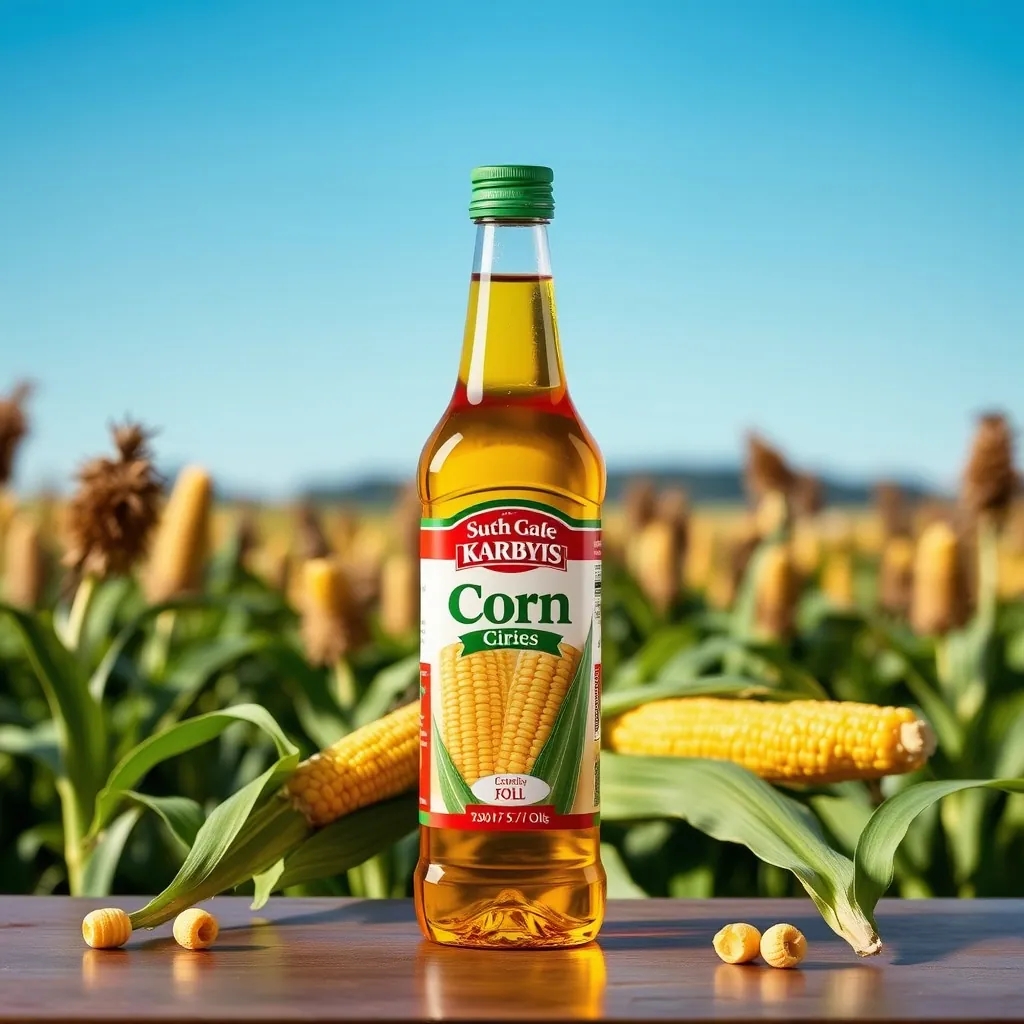
Refined corn oil is maize germ oil that has been refined, bleached, deodorised and normally winterised, leaving a clear, pale, neutral-tasting oil ready for food use. The important difference from sunflower or soybean oil is upstream of the refinery: corn oil is not pressed from a dedicated oilseed. It comes from the germ separated out when maize is milled for starch, sweeteners, ethanol or grits, and the oil is recovered from that germ fraction.
That has two consequences a buyer should understand. First, corn oil availability tracks the milling industry as much as the oilseed crush, so the supply logic behind it differs from sunflower. Second, the germ is a small fraction of the kernel, so corn oil is a lower-volume oil than sunflower or soy in world trade and trades accordingly. Ukraine's position as a major maize origin is what makes the oil available here in export quantities at all.
Who buys bulk corn oil, and for what
Corn oil is bought most often by businesses selling to consumers who recognise the name, and secondarily by manufacturers who want a neutral oil with a different label story from sunflower. In practice the buyers are:
- Retail bottlers and private-label packers. In many markets corn oil holds a premium shelf position against generic vegetable oil, which is what makes a bottled corn oil line worth running.
- Commercial frying operations and foodservice distributors buying frying oil in drums and jerry-can-sized packed formats.
- Margarine, spread and shortening producers using corn oil as a liquid component with a recognised name on the ingredient list.
- Dressing, mayonnaise and sauce manufacturers, where the oil is neutral and the label claim has value.
How corn oil sits against the other refined oils we export
Corn oil is chosen for its name and its neutrality rather than for a performance advantage that a laboratory would deem decisive. All four of the refined oils we export — sunflower, maize, soya bean and rapeseed — are pale, neutral and suitable for frying, baking and emulsions; the choice between them is usually commercial. Where corn oil is genuinely distinctive is in its unsaponifiable fraction: the Codex standard allows corn oil up to 28 g/kg of unsaponifiable matter against 15 g/kg for both sunflower and soya bean oil, which reflects the phytosterol content that the maize germ brings with it.
Because the applications overlap heavily with sunflower, it is usually worth asking for both in the same enquiry and deciding on landed cost rather than on grade. Corn oil’s consumer recognition can support a higher shelf price that outweighs a higher cost per tonne, and its lower trade volume means availability is better planned than assumed in a tight window.
- Corn oil against sunflower oilCost, smoke point and frying performance compared
- Smoke point chartPublished smoke and flash points across 45 oils and grades
Codex reference figures for maize oil
The figures below are the limits set by the Codex Alimentarius standard for named vegetable oils (CODEX STAN 210-1999), which names this oil maize oil and recognises corn oil as a synonym. They describe the standard, not a single consignment: the certificate of analysis issued with your shipment is what governs, and your own specification may be tighter.
- Relative density (20°C/water at 20°C): 0.917 – 0.925
- Refractive index (ND 40°C): 1.465 – 1.468
- Saponification value: 187 – 195 mg KOH/g oil
- Iodine value: 103 – 135
- Unsaponifiable matter: not more than 28 g/kg
- Acid value, refined oils: not more than 0.6 mg KOH/g
- Peroxide value, refined oils: up to 10 milliequivalents of active oxygen per kg
The identity characteristics are what an incoming inspection uses to confirm that the oil is maize oil and has not been blended with something cheaper — a check worth making on corn oil precisely because it usually sells at a premium to the oils it could be cut with. Tell us the limits your specification holds and we will confirm against them before loading. Non-GMO grades are available on request, which is a question worth asking on maize as it is on soy.
Winterisation and cold clarity
Winterisation chills the refined oil and filters out the higher-melting waxes and glycerides so that it stays bright rather than clouding in a cold warehouse or on a chilled shelf. For a bottler this is a commercial issue more than a technical one: a clouded bottle reads as a fault to a shopper even when the oil is perfectly sound, and the complaint arrives at the retailer rather than at the refinery.
If your market has cold retail, unheated warehousing or winter road transport, treat cold behaviour as a contract parameter rather than an assumption. State the cold test you require and the temperature and holding time behind it, and it will be confirmed on the certificate of analysis for the consignment along with everything else you set.
- What winterisation doesWax removal, cold clarity and when it is worth paying for
- PET bottling and private labelFill sizes, labels and what a bottled line involves
What to specify when you request a bulk corn oil quotation
An enquiry that answers the points below comes back as a firm offer rather than a list of questions. Every item is something the buyer sets:
- Grade: refined (RBD) maize oil, and whether you require it winterised.
- Volume for the first shipment, and whether you are pricing a spot parcel or a term contract.
- Packing format, and for packed goods the fill size, closure and whether the label is yours.
- Destination port and the Incoterm you want quoted.
- The parameters your specification holds — acid value or free fatty acid, peroxide value, moisture, colour, cold test — each with the laboratory method named.
- Whether a non-GMO declaration is required for your market.
- Any contaminant limits your destination imposes, and the standard you test against.
- Whether you intend to appoint an inspector at loading, and at whose cost.
Packing formats, and which suits which destination
Packing follows the volume moving and what the receiving end can discharge. Because a large share of corn oil demand is for bottled retail product rather than for tank bulk, the packed formats matter more on this oil than on the others we export.
- PET bottles, for buyers taking finished retail or catering packs, including private-label fills in the sizes your market sells.
- Drums of 190 kg, stackable and handled anywhere there is a forklift, and the usual format for frying oil going to foodservice.
- IBC, palletised, for part loads and for sites with no tank intake.
- Flexitank, for a full container load of bulk oil into a port with edible oil handling.
- ISO tank, for repeat lanes and receivers with dedicated discharge equipment.
Name the discharge port and we will say which formats are practical on that lane: a port without edible oil tank storage can turn a bulk saving into a road tankering cost.
Incoterms, payment and lead time
We quote FOB or CIF to a named port under Incoterms 2020. FOB puts ocean freight and marine insurance in your hands, which suits buyers with their own freight contracts; CIF puts them in ours and folds them into a single landed figure, which suits buyers who would rather compare one number. The port has to be named in the contract either way, because a region is not a price. Payment is by bank transfer (T/T) in EUR or USD, and lead time is typically 7 to 14 days from order confirmation, subject to packing format and loading window.
Documents that travel with a consignment
Every consignment ships with a certificate of analysis and a certificate of origin. The certificate of analysis is lot-specific and reports against the parameters the contract names, which is why the limits you set at enquiry stage are the limits you can hold a shipment to. The certificate of origin establishes origin for customs purposes.
The shipment file also carries the commercial invoice, the packing list and the bill of lading. Where your terms require independent verification you may appoint a third-party inspector — SGS, Intertek and Bureau Veritas are the names buyers most often use — to attend sampling at loading at your own cost. Appointing the inspector yourself is what makes the report independent.
Manufacturing in Ukraine, and how to enquire
Maize is one of Ukraine's largest field crops, which is why we refine corn oil in the same operation as our sunflower, soya bean and rapeseed grades rather than trading it in from a third origin. Refine Sunflower Oil has exported edible oils since 2000 and is based at Gareth Jones St 8, 04119 Kyiv, Ukraine. Our operation runs to HACCP and ISO 22000 food safety standards.
Write to export@refinesunfloweroil.com, or use the contact form, with the grade, the volume, the packing format and fill size, the destination port, the Incoterm and the specification limits you work to. Email is the quickest route to a firm offer.
- Export and logisticsHow we pack, document and ship each consignment
- Request a quotationSend grade, volume, packing and destination port
Related grades
The crude form of this oil suits buyers who refine in-house, and refined canola oil covers much the same applications.
Supply & shipping terms
- Incoterms
- FOB or CIF, named port, Incoterms 2020
- Payment
- Bank transfer (T/T) in EUR or USD
- Lead time
- Typically 7–14 days from order confirmation
- Documentation
- Certificate of analysis, certificate of origin, full export documents
- Food safety
- HACCP and ISO 22000
- Area served
- Worldwide
Specifications are indicative. Contract terms and a certificate of analysis are issued per consignment.