
Product line
Bulk Canola Oil — Refined (RBD) Rapeseed Oil Supplier
Bulk canola oil is refined low erucic acid rapeseed oil, and the two names describe the same crop. We refine it in Ukraine and export it to importers, bottlers and food manufacturers who need a pale, neutral, heat-stable oil that carries no flavour of its own into the finished product. This page sets out the naming, the grade decision, the parameters you put in a contract, the packing formats we load and the terms we quote on.
Canola oil and rapeseed oil are the same oil
Canola oil is rapeseed oil pressed from low erucic acid varieties, so an enquiry for one is an enquiry for the other. The Codex Alimentarius standard for named vegetable oils (CODEX STAN 210-1999) states it plainly: it defines rapeseed oil of the low erucic acid type as the oil produced from low erucic acid seed of varieties derived from Brassica napus L., Brassica rapa L. and Brassica juncea L., and it lists low erucic acid turnip rape oil, low erucic acid colza oil and canola oil as names for that same product.
What differs is regional habit. North American buyers write canola; European contracts and crush reports write rapeseed or colza, and on a European retail shelf a bottle labelled rapeseed oil is often a cold pressed culinary oil rather than a refined one. Because the words travel differently, name the grade in the contract and not just the crop: refined (RBD) low erucic acid rapeseed oil leaves nothing to interpret.
Erucic acid, and why the qualifier is part of the name
Erucic acid is the long-chain fatty acid that plant breeding bred out of rapeseed to turn it into a food oil, and the low erucic acid qualifier is what separates today's canola from the older industrial crop. Codex draws the line at not more than 2 percent erucic acid as a percentage of total fatty acids (CODEX STAN 210-1999). Several import regimes set their own ceiling for food use, some of them below the Codex figure.
So erucic acid is a parameter to write into the contract at the limit your own market requires, not one to assume from a datasheet. Tell us the limit you need held and we confirm against it before loading; the certificate of analysis for your consignment records the result.
What refining does, and why food manufacturers specify it
Refining takes crude rapeseed oil through neutralising, bleaching, winterising and deodorising, and what comes out is pale, clear and effectively neutral. Neutralisation removes free fatty acids. Bleaching removes colour bodies and traces of metal. Winterising takes out the waxes that would cloud the oil in cold storage. Deodorising strips the volatile compounds that carry smell and taste.
For a production line that sequence matters more than the crop does. A neutral oil goes into mayonnaise, dressings, margarine, bakery, sauces and a fryer without being tasted in any of them, and a winterised oil stays bright in a cold warehouse. If winterising is critical to your process — it usually is for buyers shipping into cold markets or filling clear bottles — say so at the enquiry stage, because it changes what we quote.
Who buys bulk canola oil, and what for
Canola is bought wherever a neutral, high-volume oil is wanted with a lighter nutrition panel than tropical fats. Typical buyers:
- Food manufacturers formulating dressings, mayonnaise, sauces, margarine and bakery.
- Frying and snack plants wanting a neutral oil that will not carry flavour between products.
- Bottlers and repackers filling retail or catering packs, often under their own label.
- Importers and distributors placing repeat consignments into a market.
- Blenders, where canola is the usual partner for sunflower oil in a vegetable oil blend.
Refined or crude: which grade belongs in your process
Buy refined if the oil goes straight into a food, a bottle or a fryer; buy crude if you operate a refinery and want the neutralising, bleaching and deodorising margin for yourself. The decision is about where the processing cost and the quality risk sit in your business, not about the oil.
Refined is right when you have no refining capacity, when the oil must arrive ready to fill or formulate with, and when a neutral taste, odour and colour are part of what your own customer is buying. Crude is right when you can handle gums, test incoming oil before it enters your process, or the end use is technical rather than food. Both grades ship from the same origin under the same contract framework, so moving between them does not mean renegotiating terms.
Codex reference parameters for low erucic acid rapeseed oil
The figures below belong to the Codex Alimentarius standard for named vegetable oils (CODEX STAN 210-1999), the internationally accepted reference for this oil. They describe the standard, not a consignment: the certificate of analysis issued with your shipment is what governs, and your own specification may be tighter than any of them.
- Relative density (20°C/water at 20°C): 0.914 – 0.920
- Refractive index (ND 40°C): 1.465 – 1.467
- Saponification value: 182 – 193 mg KOH/g oil
- Iodine value: 105 – 126
- Unsaponifiable matter: not more than 20 g/kg
- Erucic acid, for the low erucic acid type: not more than 2 percent of total fatty acids
- Acid value, refined oils: not more than 0.6 mg KOH/g
- Peroxide value, refined oils: up to 10 milliequivalents of active oxygen per kg
We publish no house figures for free fatty acid, peroxide value, moisture, colour or erucic acid content. You state the limits your specification and your regulator require, we confirm against them before loading, and the certificate of analysis for the consignment reports what was loaded. Independent inspection at loading by SGS, Intertek, Bureau Veritas or another surveyor you appoint can be arranged at your cost.
Non-GMO canola oil, and the certifications we hold
Non-GMO grades are available on request, and that has to be agreed before the contract is signed rather than asked for after loading. Rapeseed is grown as conventional and as genetically modified varieties depending on the country, which is why non-GMO is a documented claim rather than a safe assumption.
Our food safety systems are certified to HACCP and ISO 22000. Those are the certifications we hold. If your retailer or your market obliges you to buy against a scheme we do not hold, say so when you enquire, so that neither side spends time on a shipment your programme cannot accept.
Packing, trade terms and documentation
Packing follows the volume moving and what the receiving end can take in. Bulk formats are the cheapest way to move oil but need tankage or a transfer point at destination; packed formats cost more per litre and need only a forklift.
- Flexitank. A single-use liner that turns a shipping container into a bulk tank, for a full container moving as one lot.
- ISO tank. A reusable tank container, where the receiver has dedicated edible oil tankage or the lane repeats.
- 190 kg drum. For buyers with no bulk receiving facilities and inland destinations reached by road.
- IBC. Stackable and forklift-handled, the middle ground for part loads and for metering into a line.
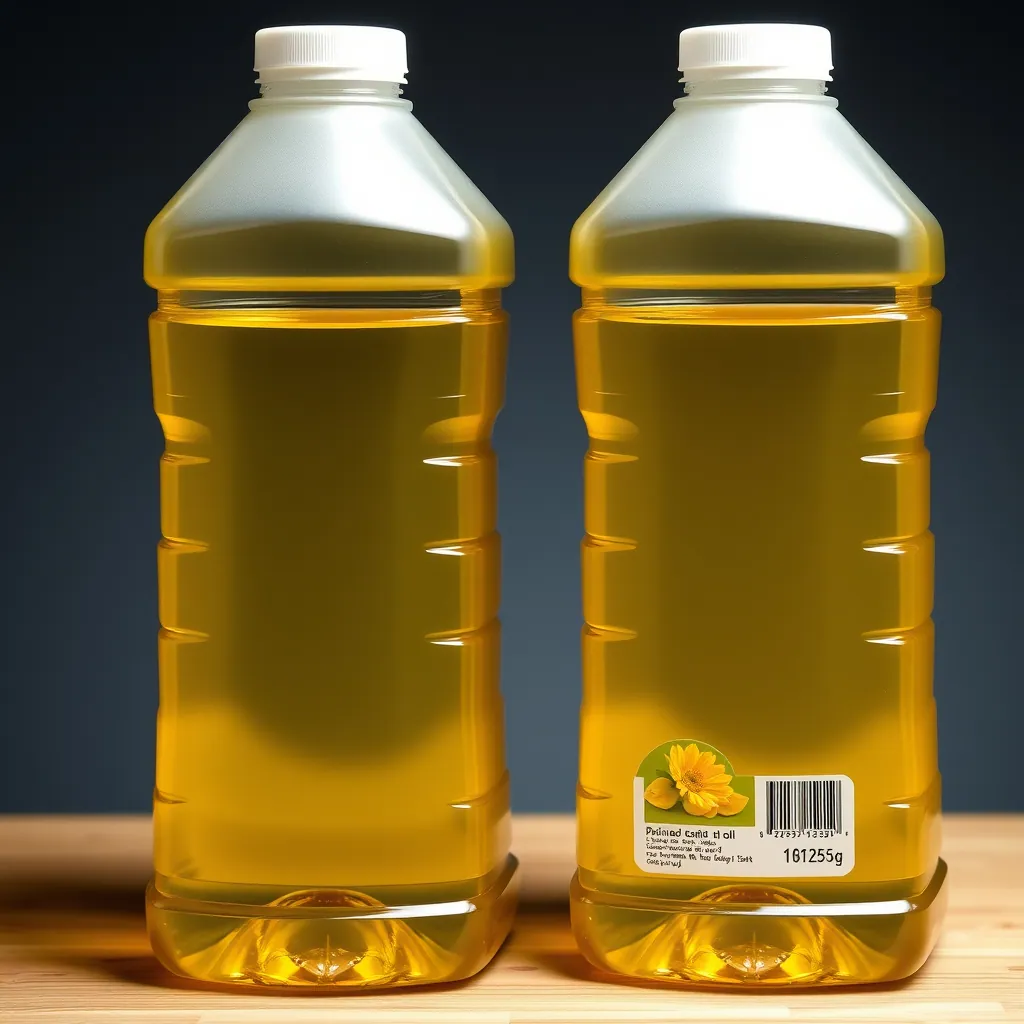
- PET bottle. Finished retail and catering packs for distributors and private-label programmes.
We quote FOB or CIF to a named port under Incoterms 2020. Under FOB the oil becomes yours at loading and you book the vessel and carry freight and insurance; under CIF we arrange carriage and insurance to the port you name and quote one landed figure. Either way the port has to be named, because a region is not a price. Payment is by bank transfer (T/T) in EUR or USD, and lead time is typically 7 to 14 days from order confirmation.
A certificate of analysis and a certificate of origin travel with every consignment, alongside the commercial invoice, packing list and bill of lading. Anything your import regime adds on top — a health or free-sale certificate, a country-specific form — is set by the destination rather than by us, so confirm the list with your broker before the contract is signed.
What to put in a quotation request
An enquiry that answers the points below comes back as a firm offer rather than as a list of questions.
- Grade: refined (RBD) canola or low erucic acid rapeseed oil, and whether it must be non-GMO.
- Quality limits: acid value or free fatty acid, peroxide value, moisture, insoluble impurities, colour and erucic acid, each with the maximum your specification allows.
- Whether winterised oil is required, and whether it will be filled into clear packaging.
- Volume per shipment, and whether this is one consignment or a running contract.
- Packing format, with pack size and pallet configuration for packed goods.
- Labelling: neutral, your own artwork or a private-label programme.
- Destination port, plus the inland destination if that changes the packing decision.
- Trade term, and any inspection you want appointed at loading.
Quotation requests are handled by email, at export@refinesunfloweroil.com, or through the contact form. Refine Sunflower Oil has exported edible oils since 2000 from Gareth Jones St 8, 04119 Kyiv, Ukraine.
- Request a quotationSend grade, limits, volume, packing and destination port
- Every oil we exportThe full product range, bottling and export logistics
- FOB or CIFWhich trade term actually leaves a buyer better off
- Flexitank, drum or IBCContainer loading formats set side by side
- Sunflower oil, both gradesThe crop we are named for, crude and refined
Related grades
The crude, degummed form of this oil is available for buyers running their own refinery, and sunflower oil is the grade most often blended with it.
Supply & shipping terms
- Incoterms
- FOB or CIF, named port, Incoterms 2020
- Payment
- Bank transfer (T/T) in EUR or USD
- Lead time
- Typically 7–14 days from order confirmation
- Documentation
- Certificate of analysis, certificate of origin, full export documents
- Food safety
- HACCP and ISO 22000
- Area served
- Worldwide
Specifications are indicative. Contract terms and a certificate of analysis are issued per consignment.