
Product line
Coconut Oil Supplier — Bulk Refined (RBD) Coconut Oil
Refine Sunflower Oil is a bulk coconut oil supplier to food manufacturers, confectionery and bakery producers, soap and surfactant plants and cosmetics formulators. Coconut is not a Ukrainian crop, so the crude is imported and refined at our plant in Ukraine. It is quoted alongside the sunflower oil we manufacture in Kyiv, on the same contracts and the same shipping terms. Send a specification, a volume, a packing format and a destination port, and a firm FOB or CIF offer comes back by email.
What refined (RBD) coconut oil is
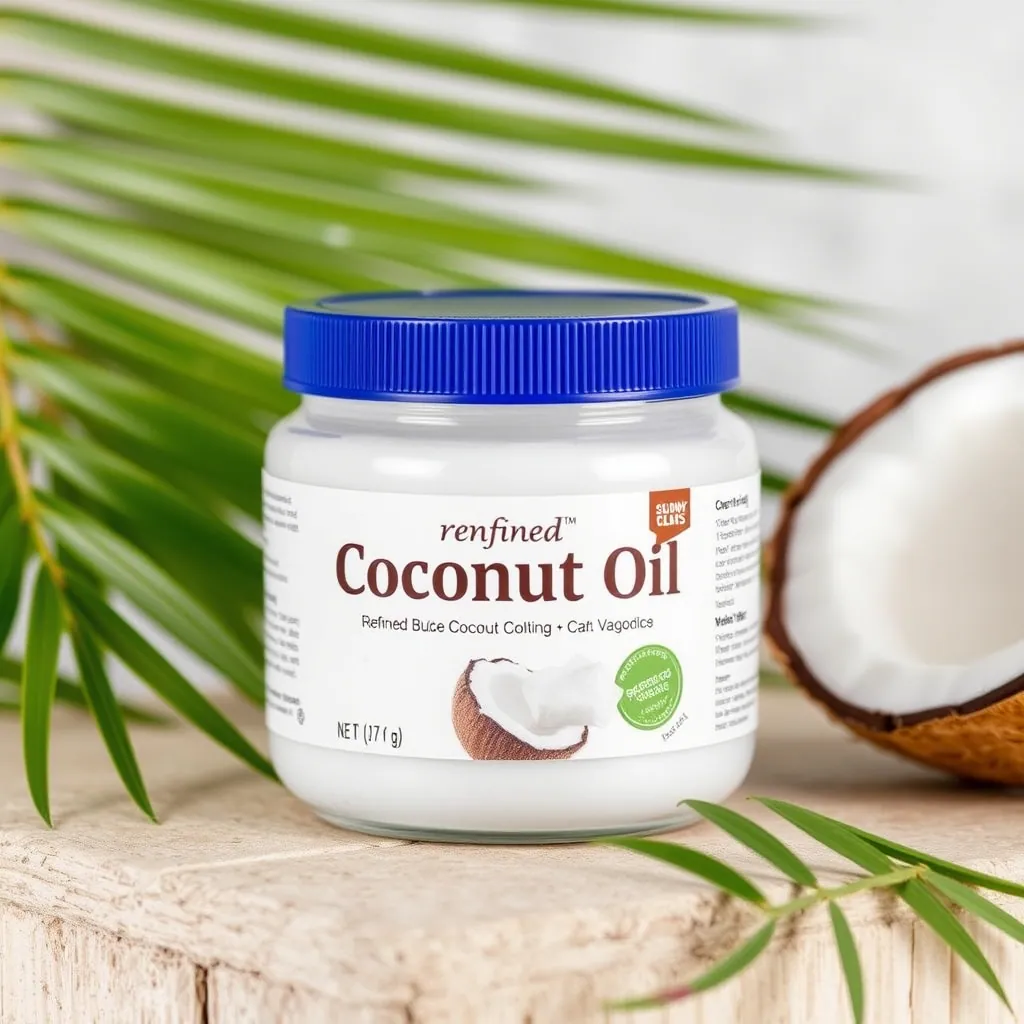
Refined coconut oil is oil from the kernel of the coconut, Cocos nucifera, that has been refined, bleached and deodorised. The starting material is normally copra, the dried kernel, which is pressed or expelled to give crude coconut oil; refining then removes free fatty acids and gums, bleaching removes colour, and deodorising under vacuum steam strips the coconut aroma and flavour. The result is water-white when melted, white when solid, and neutral enough to disappear into a formulation.
Coconut oil is a lauric oil: lauric acid dominates its fatty acid profile, it is highly saturated, and it is therefore solid at temperate ambient temperature and notably resistant to oxidation. The Codex Alimentarius Standard for Named Vegetable Oils, CODEX STAN 210-1999, covers coconut oil and sets the characteristics by which it is identified. Where a contract references Codex, the certificate of analysis for the consignment is still what governs the lot delivered.
RBD coconut oil against virgin coconut oil
The two are different products with different buyers, and the distinction is about the starting material and the processing rather than about quality in the abstract.
- Virgin coconut oil is made from fresh kernel or coconut milk rather than dried copra, and is not refined. It keeps the coconut aroma and flavour, and is bought where that character is wanted or where a label claim depends on it.
- RBD coconut oil is made from copra and is refined. It is neutral in taste and odour, visually clean and consistent from consignment to consignment, which is what a production line needs.
- Fractionated coconut oil, often sold as MCT oil, is the liquid fraction separated from the oil. It stays pourable at room temperature and is a different purchase again.
- Hydrogenated coconut oil is hardened to raise its melting range, and is used mainly in confectionery coatings.
Most industrial buyers want the RBD grade, because a neutral and repeatable fat is easier to formulate around than an aromatic one. If you need virgin, fractionated or hydrogenated material, say which in the enquiry and we will quote against that instead.
Coconut oil or palm kernel oil? Choosing between the lauric pair
Coconut oil and palm kernel oil are the two commercial lauric oils and they compete directly. Both are lauric-dominant, both are solid at temperate ambient temperature, both are stable, and in soap and surfactant chemistry they are frequently interchangeable at the formulation level.
Where they part company is melting behaviour and price. Coconut oil melts over a narrower range, which confectionery formulators value for a clean break in the mouth, while palm kernel oil fractions tend to set firmer and are often the cheaper of the two. Because the two track each other, experienced buyers ask for both on the same enquiry and decide on landed cost. We supply crude palm kernel oil as well, so one email covers the pair.
What buyers use refined coconut oil for
- Bakery and biscuit manufacturers wanting a firm, stable fat without a coconut taste.
- Confectionery and coating fat producers, where the melting profile of a lauric fat does the work.
- Snack and frying operations choosing a saturated oil for its resistance to breakdown under heat.
- Dairy alternative and non-dairy creamer producers using coconut fat as the structuring lipid.
- Soap makers, for lather and bar hardness: bulk coconut oil is a staple of industrial and artisan soap production alike.
- Surfactant and oleochemical plants splitting the oil for fatty acids and fatty alcohols.
- Cosmetics and personal care formulators using it as an emollient and a carrier.
Tell us which of these describes you, because it changes which parameters we need confirmed before a quotation can be firm.
- Coconut oil set against sunflowerWhich fits a given production need, and why
- HACCP in an edible oil supply chainThe principles, and what they look like in practice
- Shelf life by packing formatDrums, IBCs and bulk tanks compared
- RBD palm oilThe other refined tropical fat we export
- Send your coconut oil specificationGrade, limits, volume, packing and destination port
What to specify when requesting a coconut oil quotation
Refined coconut oil is supplied against your own specification. We publish no figures, because the limits that matter differ by application and because a web page cannot describe a consignment that has not been loaded. You state the limits, and the certificate of analysis for the lot reports against them.
- The grade: RBD, virgin, fractionated or hydrogenated.
- Free fatty acid maximum, with the test method named.
- Moisture and impurities limits, and a colour limit if your pack or product is light-coloured.
- Melting behaviour or solid fat content at the temperatures your process relies on.
- Peroxide or oxidative stability requirements where your shelf life depends on them.
- Contaminant limits your import regime applies to copra-derived oils, which can include mycotoxin and residue testing.
- Volume, packing format, destination port and the Incoterm you want quoted.
Name the test method against each limit so that two offers can be compared properly, and state in the contract whether pre-shipment testing is required and who appoints the inspector. SGS, Intertek and Bureau Veritas are the names buyers usually nominate for that role.
Packing a fat that arrives solid
Refined coconut oil is solid at temperate ambient temperature and liquid in a tropical one, so packing has to be chosen for the destination rather than for the loading port. A consignment that arrives set needs heating before it will pump, and whether you can do that decides the format.
- Drums of 190 kg. The default where an oil will arrive solid: a drum takes a set fat without complaint and can be melted out in batches.
- IBC. Palletised, stackable and forklift-handled, for mid-volume buyers with a melting arrangement but no tank intake.
- ISO tank. A reusable tank container, often steam-coiled, for bulk movements into a site with heating and pumping.
- Flexitank. A single-use liner inside a standard container. Economical per tonne, but for a lauric fat the lane and the season have to be checked before it is quoted.
Give us the destination port, the ambient temperature on arrival and your discharge equipment, and we will quote the formats that work rather than all four.
Certification: what we hold, and what we do not
Our food safety systems are certified to HACCP and ISO 22000, and non-GMO grades are available on request. That is the full list, and we state it plainly because a buyer who needs more should find out now rather than after a contract is drafted.
Coconut oil enquiries frequently ask for organic certification, and we do not hold it. If your programme requires certified organic material, we are not the right supplier for that line and would rather say so in the first email than waste your sourcing time. Where your market requires any other scheme certificate, name it at the enquiry stage.
Trade terms, documents and how to get an offer
We quote FOB or CIF to a named port under Incoterms 2020. FOB leaves ocean freight and marine insurance with you from the port of shipment; CIF puts them with us and gives you a single landed figure to compare across suppliers. The port must be named in the contract. Payment is by bank transfer (T/T) in EUR or USD, and lead time is typically 7 to 14 days from order confirmation.
Every consignment carries a certificate of analysis and a certificate of origin, with the commercial invoice, packing list and bill of lading. Coconut oil classifies under HS heading 1513; your customs broker confirms the subheading. Name the import country early and we will confirm anything further your regime requires, such as a health or free-sale certificate.
Write to export@refinesunfloweroil.com, or use the contact form, with the grade, your limits, the volume, the packing format, the destination port and the Incoterm. Email is the fastest route to a firm number. Our office is at Gareth Jones St 8, 04119 Kyiv, Ukraine, and we have been exporting edible oils since 2000.
Related grades
Crude palm kernel oil is the closest lauric alternative, and the other refined seed oils we carry are quoted on the same shipment terms.
Supply & shipping terms
- Incoterms
- FOB or CIF, named port, Incoterms 2020
- Payment
- Bank transfer (T/T) in EUR or USD
- Lead time
- Typically 7–14 days from order confirmation
- Documentation
- Certificate of analysis, certificate of origin, full export documents
- Food safety
- HACCP and ISO 22000
- Area served
- Worldwide
Specifications are indicative. Contract terms and a certificate of analysis are issued per consignment.