
Product line
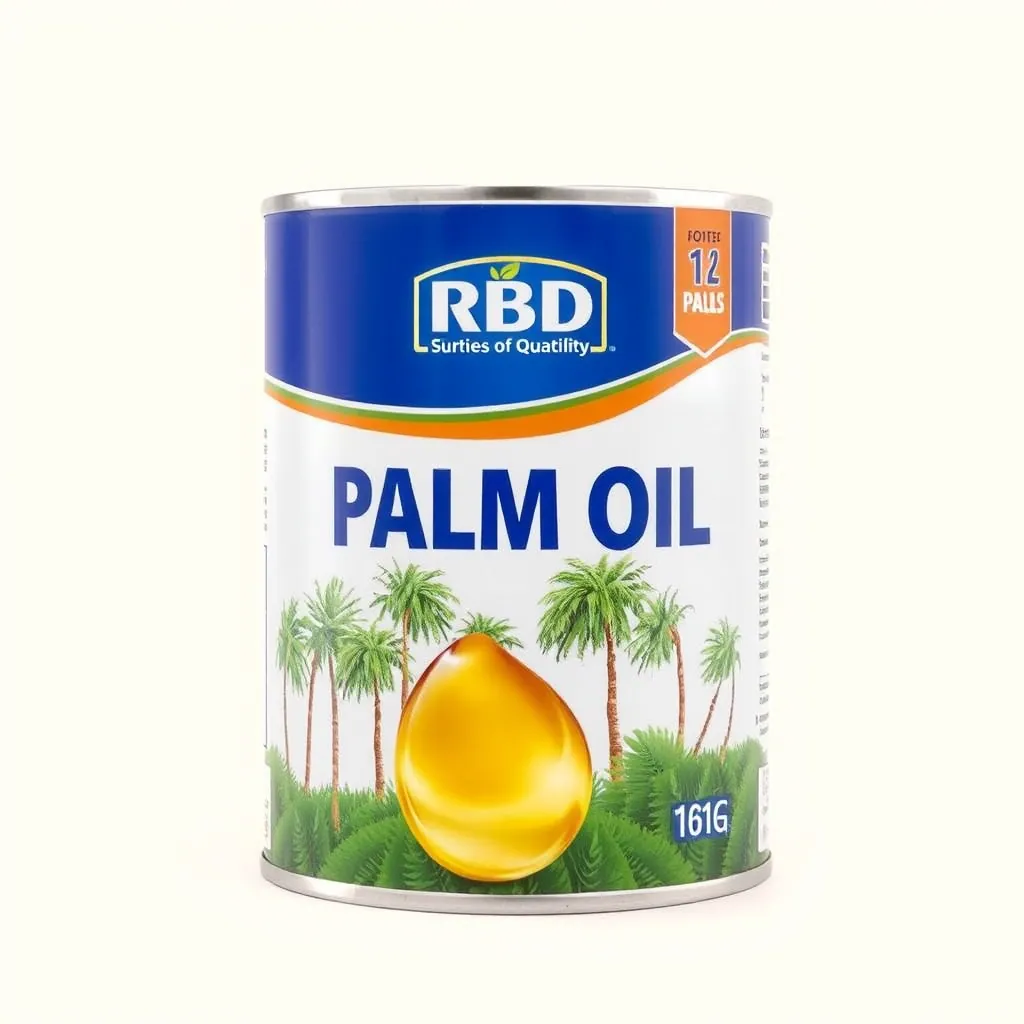
Bulk Palm Oil — RBD Palm Oil Supplier
Refine Sunflower Oil supplies RBD palm oil and its fractions in bulk to food manufacturers, frying operations, bakery and confectionery fat producers and bottlers. Palm is not a Ukrainian crop, so the crude arrives imported and is refined at our plant in Ukraine. It is quoted quoted alongside the sunflower oil we manufacture in Kyiv and shipped on the same terms. This page covers what RBD palm oil is, how palm olein and palm stearin differ from it, what to specify, and how a semi-solid fat behaves in packing and at discharge.
What RBD palm oil is
RBD palm oil is crude palm oil that has been refined, bleached and deodorised. Refining removes free fatty acids and gums; bleaching with activated earth removes the carotenoid pigments that make crude palm oil red; deodorising under vacuum with steam strips the volatile compounds that carry odour and flavour. What comes out is a pale, bland, neutral fat that will not impose a colour or a taste on the product it goes into.
The grade is covered by the Codex Alimentarius Standard for Named Vegetable Oils, CODEX STAN 210-1999, which names palm oil, palm olein and palm stearin among the oils within its scope. Codex sets the identity characteristics; the certificate of analysis issued for your consignment is what governs the lot you actually receive.
RBD palm oil, palm olein and palm stearin: choosing the fraction
RBD palm oil is semi-solid at temperate ambient temperature, which is useful in some products and a nuisance in others. Fractionation resolves that by splitting it: the oil is cooled under control and filtered, and the liquid and solid parts are separated and sold as different products. Three names cover most enquiries, and naming yours in the first line saves a week.
RBD palm oil
The whole refined oil, unfractionated. It is the right buy where the solid fat content is itself the point: shortenings, margarine and vegetable fat blends, bakery fats, and any formulation that needs structure at room temperature without hydrogenation.
RBD palm olein
The liquid fraction. It stays clear and pourable at warmer ambient temperatures, which is why it is the dominant cooking and frying oil across much of Asia, Africa and the Middle East, both in bulk for industrial fryers and in retail bottles. A buyer asking for palm cooking oil almost always means olein.
RBD palm stearin
The hard fraction. Its uses run from bakery fats and margarine hardstock to soap, candles and technical applications where a high-melting fat is wanted. It is also the co-product that has to find a home whenever olein is produced, which is why its availability and its price follow a logic of their own.
Who buys RBD palm oil, and what it does in the product
- Industrial frying operations and snack manufacturers, where stability under sustained heat decides how long a fryer charge lasts.
- Bakery and biscuit manufacturers using palm fats for structure, mouthfeel and shelf life.
- Confectionery and coating fat producers, often alongside a lauric fat such as palm kernel oil.
- Margarine, spread and vegetable ghee producers, for whom solid fat content across a series of temperatures is the functional specification.
- Bottlers and repackers filling retail or catering packs, usually of olein rather than the whole oil.
- Instant noodle, ready meal and processed food manufacturers buying a neutral, stable frying and formulation fat.
Palm's commercial position rests on two things: it is stable enough to fry with repeatedly, and it is solid enough at room temperature to give structure without hydrogenation. The second point is why it replaced partially hydrogenated fats in so many formulations.
- How RBD refining actually worksRefined, bleached and deodorised, step by step
- Smoke points side by sideA comparison chart for frying and high-heat use
- Importing into the EUFood safety compliance checklist for edible oils
- Refined olive oilAnother refined grade we source and export
- Ask for an RBD offerProduct, limits, volume, packing and port
What to specify when buying RBD palm oil
RBD palm oil is supplied against your own specification. We publish no figures, because the parameters that matter differ by application and because a datasheet on a web page describes no particular consignment. You set the limits; the certificate of analysis for the consignment confirms what was loaded against them.
- The product: RBD palm oil, RBD palm olein or RBD palm stearin.
- Free fatty acid maximum, with the test method named.
- Moisture and impurities limits, and the colour limit your pack or product needs.
- Melting behaviour or solid fat content at the temperatures your process depends on, where the application turns on texture.
- Peroxide or oxidative stability requirements, where your shelf life calculation uses them.
- Trace contaminant limits set by your import regime, including any process contaminant limits your market applies to refined oils.
- Volume, packing format, destination port and the Incoterm you want quoted.
Where a parameter is critical, state in the contract which method applies and whether pre-shipment testing is required. Buyers commonly appoint SGS, Intertek or Bureau Veritas as inspector, and we work to whichever is named in the contract.
Packing, solidification and discharge
RBD palm oil sets at temperate ambient temperature while palm olein stays liquid over a wider range, so the right packing format depends on which product is moving and where it is going as much as on volume.
- Flexitank. A single-use liner that turns a shipping container into a bulk tank. Works well for olein on most lanes; for the whole oil the route and the season need checking before it is quoted.
- ISO tank. A reusable tank container, frequently steam-coiled, and the controlled answer for a fat that will arrive set.
- Drums of 190 kg. Tolerant of solid product, suited to inland destinations and to buyers melting out in batches.
- IBC. Palletised, stackable and forklift-handled, for mid-volume buyers metering into a line.
- PET bottles. Retail and catering packs of olein, cartoned and palletised, for distributors and own-label programmes.
Tell us the destination port, the ambient temperature on arrival and your discharge equipment, and we will quote the formats that genuinely work on that lane.
Certification, labelling and sustainability requirements
Our food safety systems are certified to HACCP and ISO 22000, and non-GMO grades are available on request. Those are the certifications we hold, and we do not claim others.
Two market requirements come up on almost every palm enquiry into Europe. Buyers are frequently obliged by their own customers to purchase against RSPO certification, and the EU Deforestation Regulation places due diligence obligations on operators placing palm oil and its derivatives on the EU market. We do not hold RSPO certification. Say so at enquiry stage if your market or your customer requires it, and we will tell you immediately whether we can serve that line.
On labelling, EU food information rules require the specific vegetable origin of a refined oil to be declared, so palm oil has to be named as palm oil on an ingredient list rather than hidden behind a generic term. Palm oil and its fractions classify under HS heading 1511; your customs broker confirms the exact subheading for the grade and packing you buy.
Trade terms, documentation and requesting a quotation
We quote FOB or CIF to a named port under Incoterms 2020. Under FOB you book the vessel and carry freight and marine insurance from loading; under CIF we arrange carriage and insurance to your named port and quote a single landed figure. The port must be named in the contract. Payment is by bank transfer (T/T) in EUR or USD, and lead time is typically 7 to 14 days from order confirmation.
Every consignment travels with a certificate of analysis and a certificate of origin, plus the commercial invoice, packing list and bill of lading. Name the import country early and we will confirm what else your regime requires, such as a health or free-sale certificate.
Write to export@refinesunfloweroil.com, or use the contact form, stating the product, the limits you need held, the volume, the packing format, the destination port and the Incoterm. Our office is at Gareth Jones St 8, 04119 Kyiv, Ukraine, and we have been exporting edible oils since 2000.
Related palm grades
Crude palm oil is available for buyers who refine in-house, and crude palm kernel oil is pressed from the kernel rather than the fruit.
Supply & shipping terms
- Incoterms
- FOB or CIF, named port, Incoterms 2020
- Payment
- Bank transfer (T/T) in EUR or USD
- Lead time
- Typically 7–14 days from order confirmation
- Documentation
- Certificate of analysis, certificate of origin, full export documents
- Food safety
- HACCP and ISO 22000
- Area served
- Worldwide
Specifications are indicative. Contract terms and a certificate of analysis are issued per consignment.