
Product line
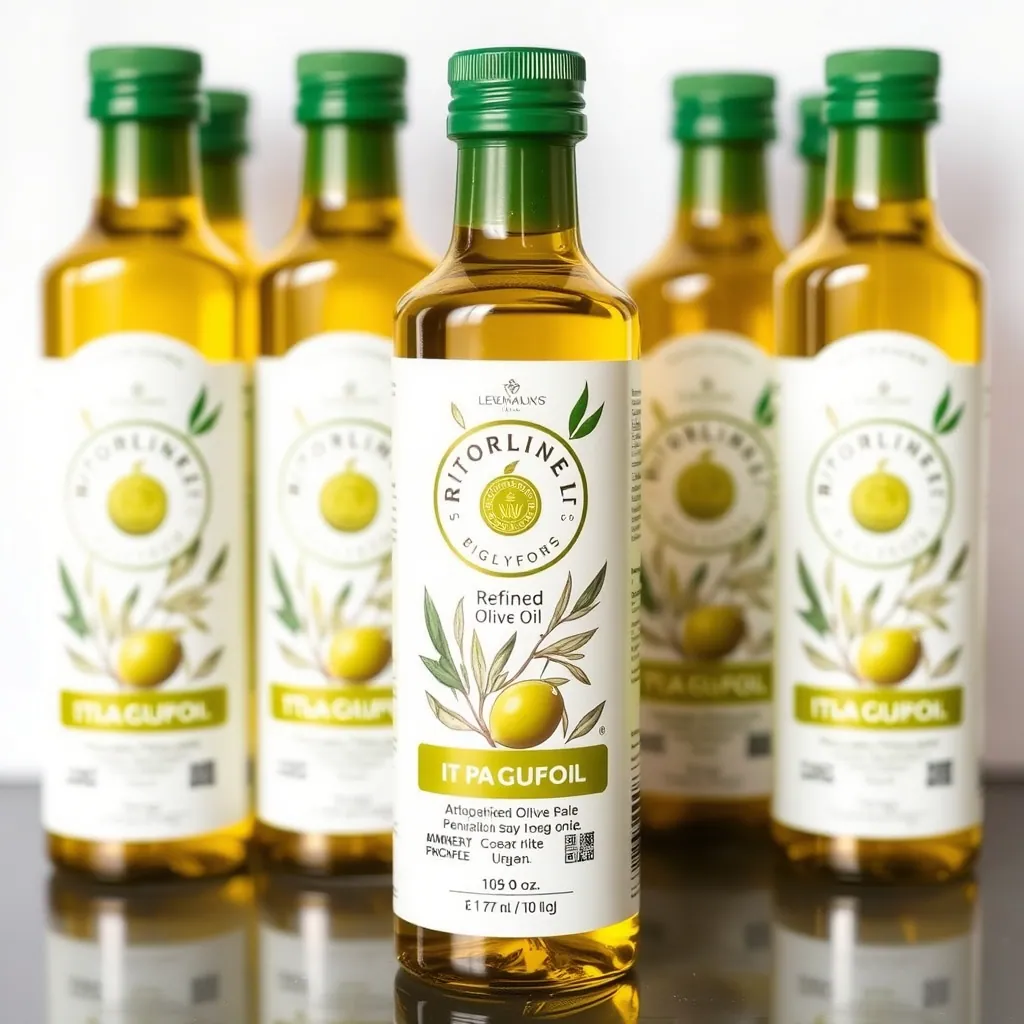
Bulk Olive Oil Supplier — Refined Olive Oil
Refine Sunflower Oil supplies refined olive oil in bulk to food manufacturers, canners, sauce and dressing producers, industrial kitchens and bottlers. Olives are not a Ukrainian crop, so the crude is imported and refined at our plant in Ukraine. It is quoted alongside the sunflower oil we manufacture in Kyiv, on the same contracts and the same shipping terms. Send a specification, a volume, a packing format and a destination port, and a firm FOB or CIF offer comes back by email.
What refined olive oil is
Refined olive oil is olive oil obtained by refining virgin olive oil that did not meet the chemical and sensory limits for sale as virgin. Refining removes free fatty acids, pigments, volatile aroma compounds and most of the phenolic content, and it is carried out in a way that does not alter the glyceridic structure of the oil. What results is a pale, neutral, stable oil that still comes wholly from olives.
The grades are defined internationally rather than by any individual supplier. The Codex Alimentarius Standard for Olive Oils and Olive Pomace Oils, CODEX STAN 33-1981, and the International Olive Council trade standard both set out the named grades and the limits that separate them, and EU marketing standards apply the same architecture in European markets. Note that olive oil sits under its own Codex standard, not the one covering named vegetable oils. Where a contract references a standard, the certificate of analysis for your consignment is what governs the oil delivered.
Refined olive oil against extra virgin, virgin and olive pomace oil
Four names cause most of the confusion in a bulk olive oil enquiry, and they are legally distinct categories rather than marketing tiers.
- Extra virgin olive oil. Mechanically extracted, unrefined, inside tight free acidity limits and faultless on a sensory panel. Bought for flavour.
- Virgin olive oil. Also mechanically extracted and unrefined, to a looser acidity limit, with minor sensory defects permitted.
- Refined olive oil. Virgin oil that failed those limits, then refined. Neutral in taste and colour, and the industrial workhorse of the category.
- Olive pomace oil. Extracted with solvent from the pomace left after pressing, then refined. A separate legal category that may not be sold as olive oil.
One further name matters at retail: a product labelled simply olive oil is normally a blend of refined olive oil with some virgin oil added back for flavour. If that blend is what you are buying, say so and state the virgin proportion you want, because it is a different purchase from refined olive oil on its own.
Why industrial buyers specify the refined grade
A production line wants a predictable oil, and refining is what makes an agricultural product predictable. The case for the refined grade rests on consistency, heat performance, a neutral palate and cost.
- Consistency. Crop year, grove and variety all move the character of a virgin oil. Refining flattens that out, so the oil behaves in week forty as it did in week one.
- Heat performance. Refining removes the free fatty acids and fine particulates that smoke and break down first, which is why a refined oil has a higher smoke point than an extra virgin one and can be used for frying and high-temperature cooking.
- A neutral palate. Where the oil is a carrier rather than a flavour, as in canned fish, sauces, dressings, bakery and marinades, the intense character of a virgin oil is a liability the buyer pays for twice.
- Cost. Refined oil comes from fruit that could not command a virgin price, so for effectively the same fatty acid profile it is materially cheaper than extra virgin.
On nutrition the honest statement is this: refining barely touches the fatty acid composition, so refined olive oil remains a monounsaturated, oleic-acid-rich oil, but it loses most of the polyphenols that virgin oils are credited with. We make no health claim for it. If polyphenol content is what your product is sold on, you want a virgin grade and should say so.
- Olive oil against sunflower at scaleWhy manufacturers switch, and when they should not
- Smoke point chartCooking oils compared for high-heat use
- Own-label bottlingPrivate label packaging and branding for wholesale buyers
- Bottling, blending and logisticsThe services that sit behind a consignment
- Request a bulk olive oil offerGrade, limits, volume, packing and port
Who buys bulk olive oil, and in what form
- Canners and preservers packing fish, vegetables and antipasti in oil.
- Sauce, dressing, mayonnaise and marinade manufacturers using olive oil as a base or a declared ingredient.
- Bakery and ready meal producers wanting an olive-origin oil without a dominant flavour.
- Industrial kitchens, caterers and foodservice distributors buying for frying and general cooking.
- Bottlers and private-label packers filling retail and catering packs under their own brand.
- Blenders producing olive and seed oil blends for price-sensitive markets.
Most of these buy by the container rather than the pallet, and most repeat. Blenders in particular want sunflower or canola quoted on the same enquiry, which we do as a matter of course.
What to specify when requesting a bulk olive oil quotation
Refined olive oil is supplied against your own specification. We publish no figures: free acidity, peroxide value and the ultraviolet absorbency limits that define the grade are all parameters you set in the contract, and the certificate of analysis for the consignment reports what was actually loaded against them.
- The grade: refined olive oil, a named virgin grade, a blend with a stated virgin proportion, or olive pomace oil.
- Free acidity maximum, with the test method named.
- Peroxide value and the ultraviolet absorbency limits your grade or your customer requires.
- A colour limit, which matters most where the oil is going into clear glass or clear PET.
- Any sensory requirement, and whether a panel assessment is contracted.
- Volume, packing format, destination port and the Incoterm you want quoted.
- Any traceability or country-of-origin declaration your label or your import regime requires.
Name the method against each limit so that two offers can be compared. Where a parameter is critical, state in the contract whether pre-shipment testing applies and who appoints the inspector; SGS, Intertek and Bureau Veritas are the usual nominations.
Packing, and protecting olive oil in transit
Olive oil stays liquid at ambient temperature, so it is easier to pack than a palm or coconut fat. The risk shifts from solidification to oxidation: light, heat, oxygen and metal contact are what degrade the oil on a long voyage, and the packing decision is largely about excluding them.
- Flexitank. A single-use liner inside a standard container, the lowest cost per tonne for a full container load into a port with liquid bulk handling.
- ISO tank. A reusable tank container for repeat lanes and for receivers with dedicated edible oil tankage.
- Lined drums of 190 kg. For inland destinations, split consignments and markets where the oil is resold in the drum.
- IBC. Palletised and stackable, for mid-volume buyers metering into a filling line.
- PET bottles. Retail and catering packs, cartoned and palletised. For a long voyage into a hot market, discuss light protection before the pack is specified.
Tell us the destination port, the transit time and what you can discharge with, and we will say which formats are worth quoting on that route.
Supply, crop years and certification
Olive oil is a Mediterranean crop with a single annual harvest, concentrated in Spain, Italy, Greece, Tunisia, Turkey, Portugal and Morocco, and picked in the autumn and early winter in the northern Mediterranean. One harvest a year is why the market is more volatile than a seed oil market: a poor crop is not corrected until the next one comes in. Buyers on repeat programmes usually contract forward rather than buying spot, and we quote both ways.
Our food safety systems are certified to HACCP and ISO 22000, and non-GMO grades are available on request. Those are the certifications we hold. We do not hold organic certification, and we say so before a contract is drafted rather than after.
Trade terms, documentation and how to enquire
We quote FOB or CIF to a named port under Incoterms 2020. FOB leaves ocean freight and marine insurance with you from the port of shipment; CIF puts them with us and produces one landed figure that can be compared across suppliers. The port has to be named, because a region is not a price. Payment is by bank transfer (T/T) in EUR or USD, and lead time is typically 7 to 14 days from order confirmation.
Every consignment ships with a certificate of analysis and a certificate of origin, alongside the commercial invoice, packing list and bill of lading. Olive oil classifies under HS heading 1509 and olive pomace oil under 1510; your customs broker confirms the subheading. Name the import country early and we will confirm what else your regime requires.
Write to export@refinesunfloweroil.com, or use the contact form, with the grade, your limits, the volume, the packing format, the destination port and the Incoterm. Our office is at Gareth Jones St 8, 04119 Kyiv, Ukraine, and we have been exporting edible oils since 2000.
Related grades
Buyers blending refined olive oil usually price sunflower and canola oil alongside it.
Supply & shipping terms
- Incoterms
- FOB or CIF, named port, Incoterms 2020
- Payment
- Bank transfer (T/T) in EUR or USD
- Lead time
- Typically 7–14 days from order confirmation
- Documentation
- Certificate of analysis, certificate of origin, full export documents
- Food safety
- HACCP and ISO 22000
- Area served
- Worldwide
Specifications are indicative. Contract terms and a certificate of analysis are issued per consignment.